



Introduction
Sneezing, coughing, a runny nose and throat irritation are common during seasonal changes. Since a cold, flu and allergy can produce similar symptoms, it may be difficult to understand what is affecting your health.
Recognising the small differences can help you choose suitable care, use medicines responsibly and know when medical advice is necessary.
Understanding a Common Cold
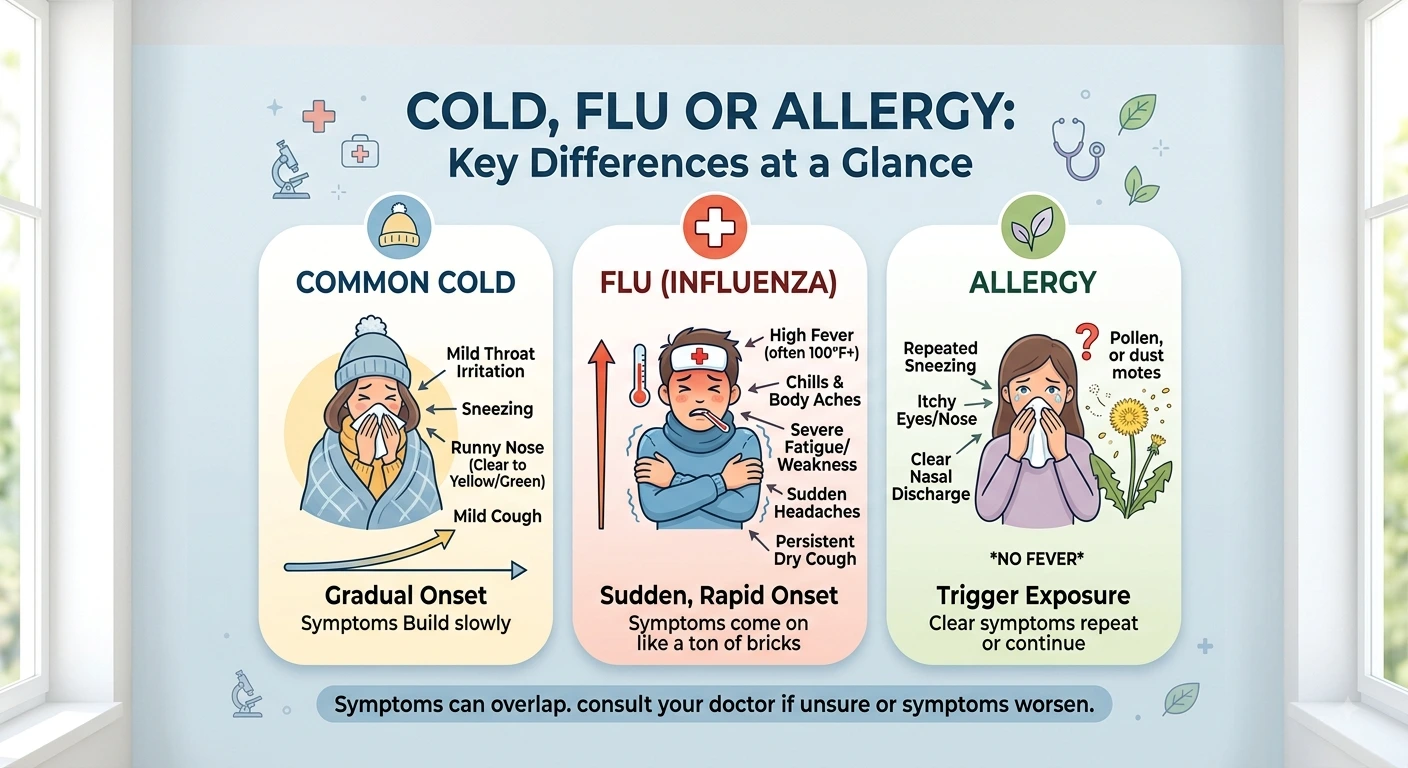
A common cold usually begins gradually. You may first notice sneezing, a blocked or runny nose, mild throat irritation or a cough.
Common symptoms include:
- Runny or blocked nose
- Sneezing
- Mild cough
- Sore throat
- Slight tiredness
Most people with a mild cold improve with rest, adequate fluids and simple home care. OTC medicines or wellness products such as saline nasal sprays and throat lozenges may provide temporary relief when used correctly.
How Is Flu Different?
Flu often appears more suddenly and may make you feel considerably weaker than a common cold.
Fever, chills, body pain, headache, cough and fatigue are commonly associated with flu. However, not everyone with flu develops a fever.
People with diabetes, asthma, heart conditions, low immunity or other ongoing health concerns should seek medical guidance early. A doctor may prescribe antiviral or other prescription medicines depending on the symptoms, risk factors and stage of illness.
Antibiotics should not be taken without a prescription because they do not treat viral infections such as a cold or flu.
When It May Be an Allergy
An allergy occurs when the body reacts to a usually harmless trigger such as pollen, dust, mould or animal dander.
Unlike flu, allergies generally do not cause fever or strong body pain. Common allergy symptoms include repeated sneezing, an itchy nose, watery or itchy eyes and clear nasal discharge. Symptoms may continue or return whenever you are exposed to the trigger.
Identifying and avoiding the trigger can help. Some people may also require antihistamines, nasal sprays or other treatment recommended by a healthcare professional.
Using Medicines Responsibly
Many cold, cough and allergy products contain similar ingredients. Taking more than one product without checking the label can result in an accidental double dose.
Before using OTC medicines, consider your age, symptoms, existing health conditions and any prescription medicines you already take. Pregnant women, children, older adults and people with chronic conditions should seek professional guidance before self-medication.
When buying medicines, choose a trusted pharmacy that provides properly stored and genuine medicines. At 365 Pharmacy Hub, pharmacist assistance can help customers understand medicine labels, dosage instructions and suitable OTC options for common seasonal health concerns.
When Should You Consult a Doctor?
Seek medical attention if you experience difficulty breathing, chest pain, persistent fever, severe weakness, dehydration or symptoms that continue to worsen.
Professional evaluation may also be necessary when symptoms keep returning, allergy triggers are unclear or a respiratory infection is suspected.
Conclusion
Cold, flu and allergy symptoms may appear similar, but they do not always require the same type of care.
Understanding how the symptoms begin, using medicines carefully and seeking medical guidance when necessary are important parts of preventive healthcare. Avoid guessing the condition or taking multiple medicines without checking what they contain.
